
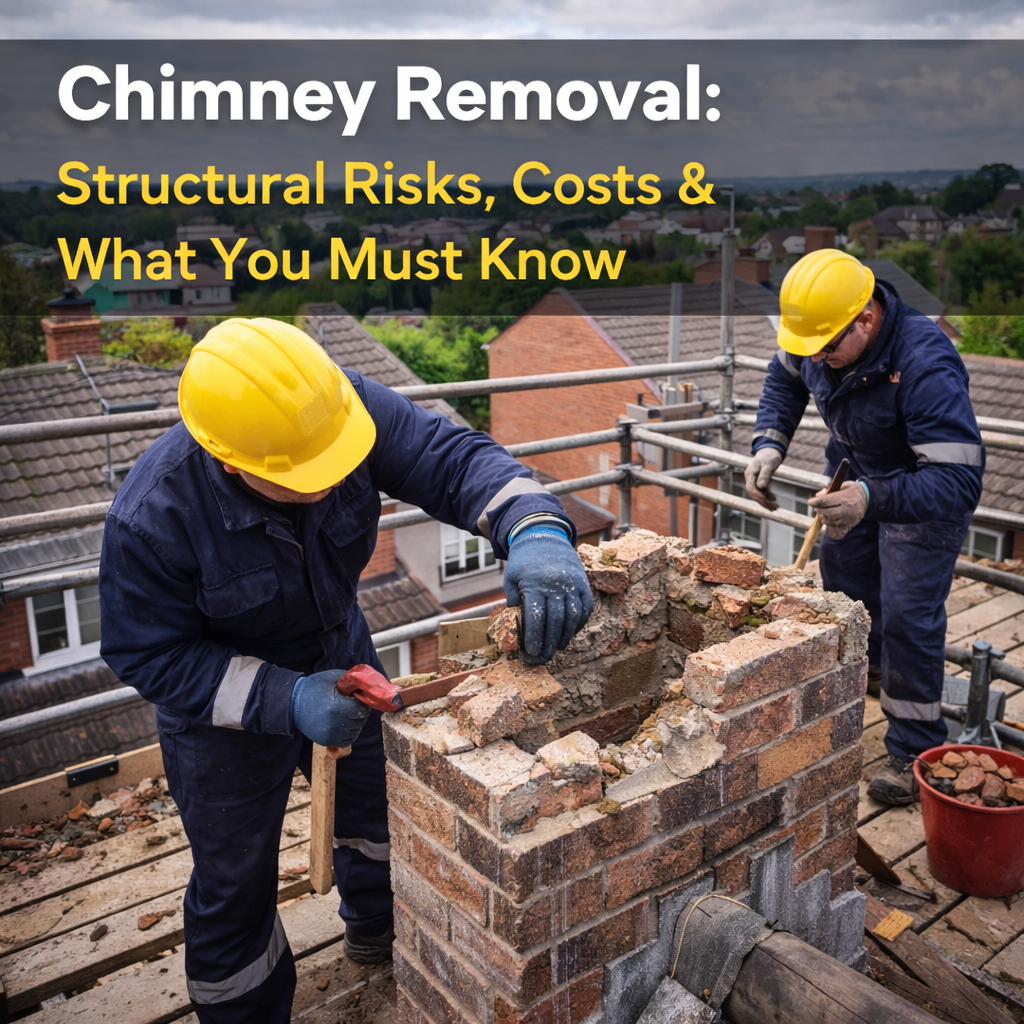
Removing a chimney is not simply a matter of demolition. Chimneys are often structural elements in a property, and improper removal can compromise the safety, integrity, and value of your home.
Many homeowners underestimate the role of chimney stacks and breasts, which frequently support floors, ceilings, and adjacent masonry.
In this guide, we explain when a chimney is load bearing, how to remove it safely, legal requirements in the UK, realistic costs, and expert tips from over 20 years of industry experience.
What Role Do Chimneys Play in Your Home?

Chimneys are more than just flues for smoke. In most traditional UK homes, especially those built before 1970, chimney stacks and breasts serve structoral functions.
You can read our full guide on how to identify load-bearing chimneys and their role in supporting floors and roofs article.
Key structural functions:
- Supporting floor joists above openings
- Carrying the weight of roof timbers or rafters
- Transferring loads from adjacent masonry walls
- Acting as stabilisers in terraced or semi detached properties
Removing a chimney without proper support can cause:
- Cracks in walls or ceilings
- Sagging or uneven floors
- Lateral movement in masonry
- Potential collapse of sections of roof or floors
Even small chimneys in extensions or alcoves can have load bearing importance.
Is My Chimney Load Bearing?

In general:
- Homes built before 1970: Chimneys are almost always load bearing.
- Homes built post 1970: Some chimneys are purely flue ducts; others are structural depending on construction.
Signs your chimney may be load bearing:
- Thick masonry from floor to roof
- Adjacent joists resting on the breast
- Supporting sections of party wall in terraces
- Visible steel lintels over openings indicate reinforcement for floor loads
A structural engineer can confirm load bearing status using measurements, floor plans, and in some cases a small inspection cut or borehole.
Do You Need Building Regulations Approval?

Yes, chimney removal is a notifiable alteration under UK Building Regulations. Removing a breast, stack, or entire chimney without approval can cause:
- Unsafe structural alterations
- Insurance issues if damage occurs later
- Problems when selling your property
Requirements include:
- Structural calculations from a qualified engineer
- Installation of approved steel support (RSJ/beam) where required
- Building Control sign off after work is completed
Even partial removal, like taking out a single chimney breast, usually requires formal approval. Some insurers may refuse claims for damage if removal was carried out without consent.
How Is a Chimney Properly Supported?

Professional chimney removal is never “gut it and hope.” Support methods vary depending on load, size, and location.
Common Methods:
- Gallows Brackets
- Short term or limited load cases
- Bolted to adjacent wall to support small chimney sections
- Rarely used in modern structural practice
- Rolled Steel Joists (RSJ/Steel Beams)
- Modern standard for load bearing breasts
- Spans the gap created by removal, transferring load to surrounding walls
- Installed with temporary propping during work
- Full Stack Removal
- Requires temporary propping of floors above
- Removal proceeds floor by floor
- Steel beam installed as permanent support where necessary
Best Practice: RSJ installation with proper propping is preferred, as it supports the load safely while allowing clean removal. All beams must comply with BS EN 1993 (Eurocode 3: Steel Structures) and be installed by professionals.
Structural Risks of DIY Chimney Removal
Attempting chimney removal without professional guidance can result in:
- Collapsed sections of walls or ceilings
- Sagging floor joists or joist failure
- Water penetration if flashing or roof is disturbed
- Expensive remedial work far exceeding original removal costs
Temporary props may fail if not correctly calculated, leading to serious injuries.
Chimney Removal Costs (UK 2026)
Costs vary depending on property size, chimney height, load bearing complexity, and access.
Typical Ranges:
| Work Type | UK Average Cost (2026) |
|---|---|
| Remove ground floor breast only | £1,500 – £3,000 |
| Remove breasts on both floors | £3,000 – £6,000 |
| Full stack removal (floor to roof) | £4,000 – £10,000+ |
Prices can vary dependant on geographical location, the complexity and amount of work undertaken. It is always a good idea to get up to 3 quotes and to not always go with the cheapest.
Cost Factors:
- Chimney height and number of floors
- Roof type (flat, pitched, slate, tile)
- Access (scaffolding or crane required)
- Load bearing status and required RSJ/beam
- Waste disposal and asbestos surveys if required
Tip: Always get a detailed quote including scaffold, structural engineering, and disposal costs. Cheaper estimates may cut corners on safety.
Should You Remove or Retain a Chimney?
Before removing a chimney, consider:
- Property value: Removing an original chimney can reduce appeal in period homes.
- Future stove installation: Removing may eliminate options for a log burner later.
- Structural implications: Removal may require multiple RSJs or temporary props.
- Planning restrictions: Listed buildings or conservation areas often restrict alterations.
In some cases, retaining the breast and lining the flue is more cost effective and maintains property aesthetics.
Step-by-Step Chimney Removal Process (Professional)
- Inspection: Structural engineer assesses chimney and load
- Building Control Notification: Submit plans and calculations
- Propping: Floors above temporarily supported with adjustable props
- Beam Installation: RSJ installed with steel bearings on adjacent walls
- Demolition: Breast/stack removed in sections
- Finishing: Openings filled, walls made good, fire stops restored
- Sign-Off: Building Control approves completed work
This approach minimises risk and ensures compliance.
Long Term Considerations
- Moisture: Removing a chimney may expose new roof sections. Proper flashing is critical.
- Heating: If removing a flue that served a stove or boiler, alternative venting must be installed.
- Resale: Structural modifications may affect market value if not correctly certified.
- Insurance: Inform insurers; failure to do so may invalidate coverage
Frequently Asked Questions (FAQs)
No. DIY removal of a load-bearing chimney is extremely risky. Always use a professional engineer and builder.
Partial breast removal: 1–3 days. Full stack removal: 3–7 days depending on height and access
A: Almost always for two or more floors or high external stacks. Scaffold ensures safety and compliance.
Only with planning permission and heritage consent. Unapproved work can lead to fines and forced restoration.
A: Insurance claims may be refused; structural failure could result in expensive remediation and legal issues.
Most chimneys built before 1970 are load-bearing. Chimney breasts can support floor joists, roof timbers, and adjacent masonry. A structural engineer should confirm before removal.
Yes. Chimney removal requires structural calculations, steel supports (RSJ), and Building Control sign-off. Failing to comply can affect insurance and property resale.
DIY removal of a chimney is strongly discouraged. Improper work can cause structural damage, collapse, and serious injury. Always hire qualified professionals.
A Rolled Steel Joist (RSJ) is a steel beam used to support floors and walls when removing a load-bearing chimney. It transfers weight safely to surrounding structures.
Partial chimney breast removal typically takes 1–3 days, while full stack removal may take 3–7 days depending on height, complexity, and scaffolding requirements.
Ground floor breast: £1,500–£3,000. Breasts on multiple floors: £3,000–£6,000. Full stack removal: £4,000–£10,000+. Costs vary with access, scaffolding, and structural requirements.
Yes, especially for multi-floor or high external stacks. Scaffolding ensures safety for workers and prevents property damage.
Risks include structural cracking, sagging floors, roof instability, and potential collapse if supports are inadequate or work is done incorrectly.
Not without consent. Planning permission and heritage approval are required. Unapproved work can result in fines and forced restoration.
Consider property value, future stove installation, structural implications, and planning restrictions. Sometimes retaining and lining is safer and more cost-effective than removal.


